
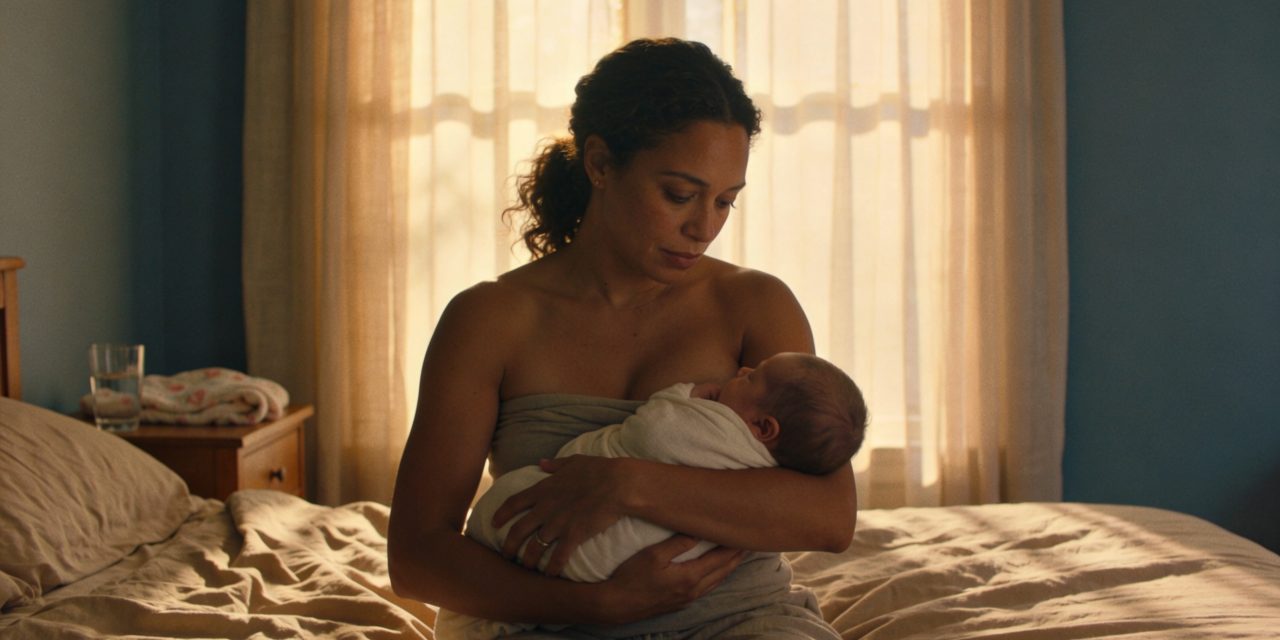
Mental & Emotional Health
Postpartum Is Not a Personality Test
(And You’re Not Failing It)
If you’re newly postpartum and thinking,
“Why didn’t anyone warn me it would feel like this?”
— welcome. You’re not broken. You’re not ungrateful. And no, you didn’t miss a secret class where everyone else learned how to feel confident, glowing, and emotionally regulated while holding a newborn on zero sleep.
Postpartum is not a performance. It’s a transition.
And transitions are messy.
Let’s Start With the Part Nobody Likes to Say Out Loud
Postpartum depression doesn’t always look like crying all day in a robe while sad music plays in the background.
Sometimes it looks like:
- Feeling emotionally flat or disconnected
- Thinking, “I should be happier than this”
- Doubting yourself constantly
- Feeling irritated, numb, or overly self-critical
- Avoiding talking about how hard it feels because you “don’t want to complain”
And sometimes it sounds like:
“Other women do this just fine.”
“My mom handled it without help.”
“I should be able to manage.”
(For the record: comparison is the fastest way to drain your emotional battery.)
When Culture Enters the Chat
For many women — especially those raised in culturally dense and traditionally expressive families — postpartum comes with extra layers.
There may be strong beliefs about:
- What a “good mother” looks like
- How much family should be involved
- Enduring hardship quietly
- Accepting advice even when it feels critical
- Not expressing emotional struggle out of respect
And while these values often come from love, tradition, and survival… they can still hurt.
You can honor your culture and acknowledge:
- That negativity disguised as “motivation” doesn’t feel supportive
- That constant advice can feel like evaluation
- That you’re allowed to need gentleness, not toughness, right now
Two things can be true at once.
(This is a recurring theme in motherhood.)
Breastfeeding, Bonding, and the Myth of “Instant Confidence”
 Let’s talk about BREAST BABY
Milk delays. Latching issues. Exhaustion. Doubt.
These are not signs of failure — they’re common postpartum experiences.
And yet, so many women quietly think:
“If I can’t even do this right, what does that say about me as a mom?”
Here’s the truth no one puts on the brochure:
Bonding doesn’t always feel magical. Confidence doesn’t arrive on day one.
Love grows — it doesn’t always explode into existence like a movie montage.
The REAL is…sometimes bonding looks like:
- Showing up again tomorrow
- Asking for help even when it’s uncomfortable
- Letting yourself be imperfect without punishment
That counts.
So while your breasts may have sung lead in getting your baby here…they often become backup singers or only show up for the reunion – if you know what I mean  .
.
Postpartum Depression Isn’t a Weakness — It’s a Signal
Depression in the postpartum period often shows up as:
- Increased self-doubt
- Withdrawal
- Avoidance of expressing needs
- Feeling like you’re “just going through the motions”
- Fear of being seen as incapable
Especially for women who already struggle with perfectionism, people-pleasing, or avoidance, postpartum can amplify these patterns.
Not because you’re failing — but because your nervous system is under construction...more appropriately REconstruction.
Your body, hormones, identity, and relationships are all renegotiating terms. That’s a lot.
“But I Don’t Want to Burden Anyone”
This is where many women get stuck.
You might want support…but also fear:
- Being judged
- Being corrected
- Being told what you “should” do
- Confirming your own worst self-critic
So instead, you minimize. You deflect. You say you’re “fine.” Even worse, you make excuses for why people can’t help.
Here’s a gentle reframe:
Needing support does not make you inadequate. It makes you human in a demanding season.
And asking for support doesn’t have to sound dramatic or confrontational.
It can sound like:
- “I don’t need advice right now — I need encouragement.”
- “It helps me when you listen rather than correct.”
- “I’m learning as I go, and reassurance means a lot to me.”
Boundaries are not rejection. They’re instructions for how to love you well.
A Few Gentle Check-In Questions (For You)
If you’re not sure how you’re really doing, try sitting with one or two of these — no pressure to fix anything:
- What feels hardest emotionally right now?
- Where am I being harder on myself than I would be on someone I love?
- What kind of support actually helps me feel calmer?
- What am I afraid would happen if I admitted I’m struggling?
- What would “good enough” look like today?
We’re not searching for epiphanies, just answers. Real. Honest. Yours.
Final Reminder (Read This Twice)
You are not behind.
You are not failing motherhood.
You are not required to feel grateful every minute to be worthy of support.
Postpartum is not about doing it perfectly.
It’s about staying connected — to yourself, to your needs, and eventually, to your baby — one imperfect day at a time. Think “airplane safety”, place the mask on yourself FIRST!
And if today all you did was show up?
That counts more than you think.

Views: 6